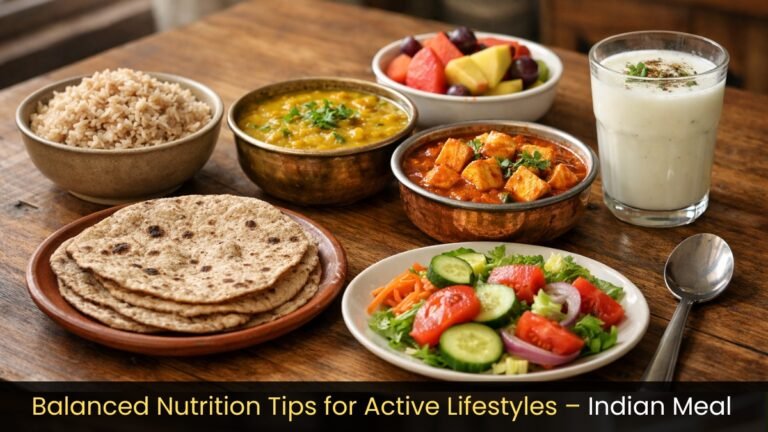
Learn the basics of nutrition and a balanced diet with simple food choices and daily habits to support overall health and wellness.
Nutrition and Balanced Diet: A Simple Guide for Everyday Healthy Eating
Nutrition and a balanced diet form the foundation of good health. What we eat daily affects our energy levels, digestion, immunity, and overall well-being. In busy modern lifestyles, meals often become irregular or overly processed, which may impact long-term health.
A balanced diet does not mean strict food rules. It means choosing a variety of foods in the right amounts to support the body’s natural needs while enjoying traditional and home-cooked meals.
What Is Nutrition and a Balanced Diet?
Nutrition refers to the process by which the body uses food for growth, energy, and maintenance. A balanced diet provides essential nutrients such as carbohydrates, proteins, fats, vitamins, and minerals in proper proportions.
According to the World Health Organization, healthy eating patterns support overall wellness and help reduce lifestyle-related health risks.
Key Components of a Balanced Diet
1. Carbohydrates
Carbohydrates are the main source of energy.
- Whole grains like rice, wheat, millets
- Fruits and vegetables
- Limit refined and sugary foods
2. Proteins
Proteins support muscle health and body repair.
- Pulses, lentils, beans
- Dairy products
- Nuts and seeds
- Eggs, fish, or lean meat (if consumed)
Dietary guidance from the ICMR highlights adequate protein intake as part of everyday nutrition.
3. Healthy Fats
Fats are essential in small amounts.
- Nuts and seeds
- Traditional oils in moderation
- Avoid excessive fried and processed foods
4. Vitamins and Minerals
These support immunity and overall body functions.
- Seasonal fruits
- Green leafy vegetables
- Colorful vegetables
Importance of Portion Control
Eating the right quantity is as important as food quality. Overeating, even healthy food, may disturb balance. Using smaller plates, eating slowly, and listening to hunger cues can support mindful eating.
Practical Daily Nutrition Tips
- Include at least one fruit and vegetable in every meal
- Prefer home-cooked food over packaged items
- Drink enough water throughout the day
- Maintain regular meal timings
- Combine nutrition with physical activity
Initiatives like FSSAI Eat Right India encourage safe, balanced, and mindful eating habits for families.
Useful Links
- Ministry of Ayush – Nutrition & Lifestyle Guidance
- World Health Organization – Healthy Diet Facts
- ICMR Dietary Guidelines for Indians
- Immunity And Disease Prevention: Daily Health Habits
FAQs
What is a balanced diet in simple terms?
A balanced diet includes different food groups in the right amounts to meet daily nutritional needs.
Can Indian food be part of a balanced diet?
Yes, traditional Indian meals with grains, pulses, vegetables, and spices can support balanced nutrition when eaten mindfully.
Is skipping meals good for health?
Skipping meals regularly may affect energy and metabolism. Consistent meal timing is generally recommended.
How much water should one drink daily?
Water needs vary, but regular hydration throughout the day is important for overall health.
Disclaimer
This article is for educational and informational purposes only. It is not intended as medical advice. Always consult a qualified healthcare professional before making any health-related changes.
Conclusion
Nutrition and a balanced diet are not about restrictions but about making informed, sustainable food choices. By eating a variety of natural foods, controlling portions, and maintaining regular habits, you can support long-term health and well-being for yourself and your family.
Author: Vijaya Health Tips
About the Author:
We share simple, practical health tips based on everyday habits, traditional practices, and general wellness knowledge to support a healthy lifestyle.
About the Author